Hi, I’m Waseem.

I’m a Computer Science student at Columbia University interested in software engineering, AI systems, developer tools, and building software around real-world problems.

Contact me

Selected projects

Recently, I built StudyOS.

StudyOS

2026

StudyOS is an AI-assisted academic workspace I built to bring courses, schedules, assignments, exams, materials, and study tools into one place. I started it because the information students need is usually scattered across syllabi, portals, calendars, and files.

The application uses Next.js and TypeScript with Supabase, PostgreSQL, Row Level Security, and Edge Functions. The technically interesting work includes syllabus parsing, schedule-image parsing, and Anthropic-powered study features, along with automated tests, GitHub Actions, and a Vercel deployment workflow.
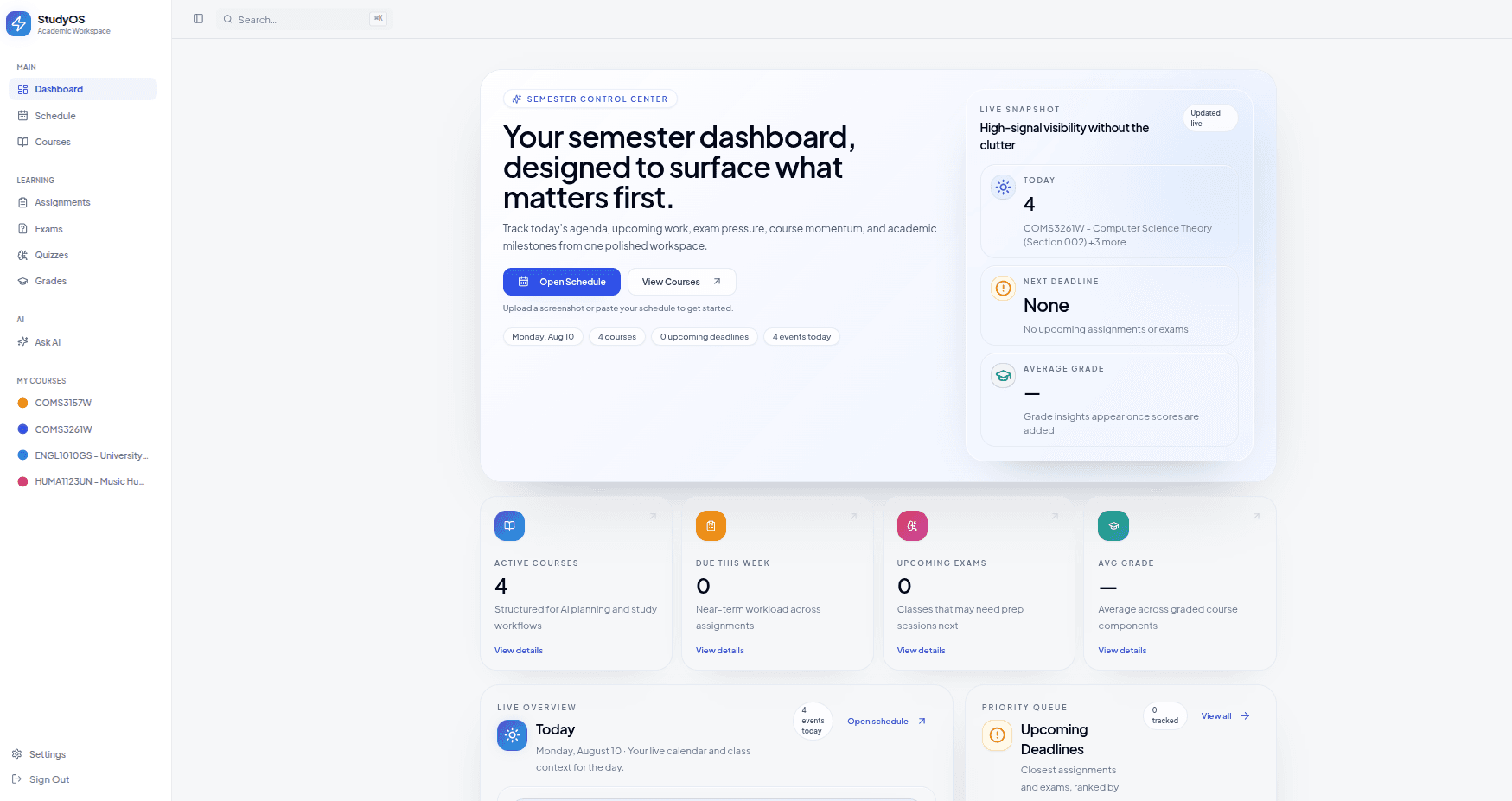
StudyOS academic workspace

Another area I explored was observability for AI agents.

AgentLens

2026

AgentLens is a self-hosted observability and debugging tool for Python AI agents. I built it around a simple problem: when an agent fails, the final response rarely explains what happened along the way.

A Python SDK collects tool calls and custom events, while a FastAPI service and React interface organize execution traces, timing, errors, model metadata, and token usage. Much of the work is about SDK design and making raw event data useful during a real debugging session.

AgentLens observability dashboard showing recent AI agent runs and execution telemetry

In an enterprise setting, I applied automation to an internal travel workflow.

Enterprise Travel Automation System

2026

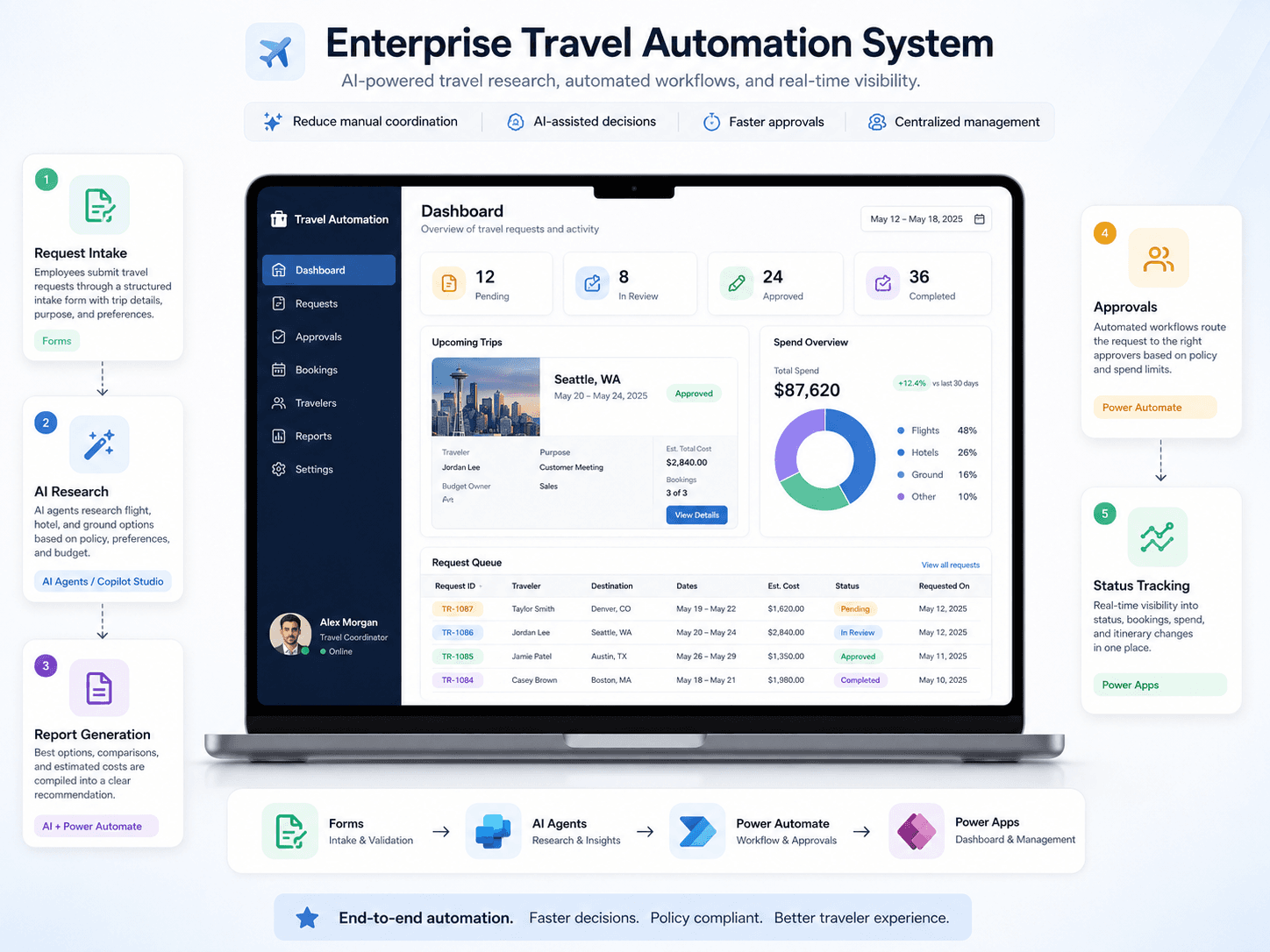
The travel department relied on manual coordination to collect employee requests, research options, prepare reports, and track each trip. I built an end-to-end automation system with Microsoft Forms, Microsoft Copilot Studio, Power Automate, Power Apps, and Microsoft 365 to bring those steps into one workflow.

Requests capture the destination, travel dates, purpose, and flight, hotel, or ground-transportation needs. Specialized AI agents assist with flight, hotel, ground-transportation, and estimated-cost research, Power Automate coordinates standardized report generation, notifications, and status updates, and a Power Apps dashboard gives the team one place to review recommendations, costs, and workflow progress.

The system moved the department from a largely manual process toward centralized, end-to-end workflow automation. It reduced repetitive coordination, saved employee time, and helped lower organizational operating costs.

Conceptual illustration of the enterprise travel automation workflow

Conceptual illustration. This is not an internal screenshot, and no organizational data is shown.

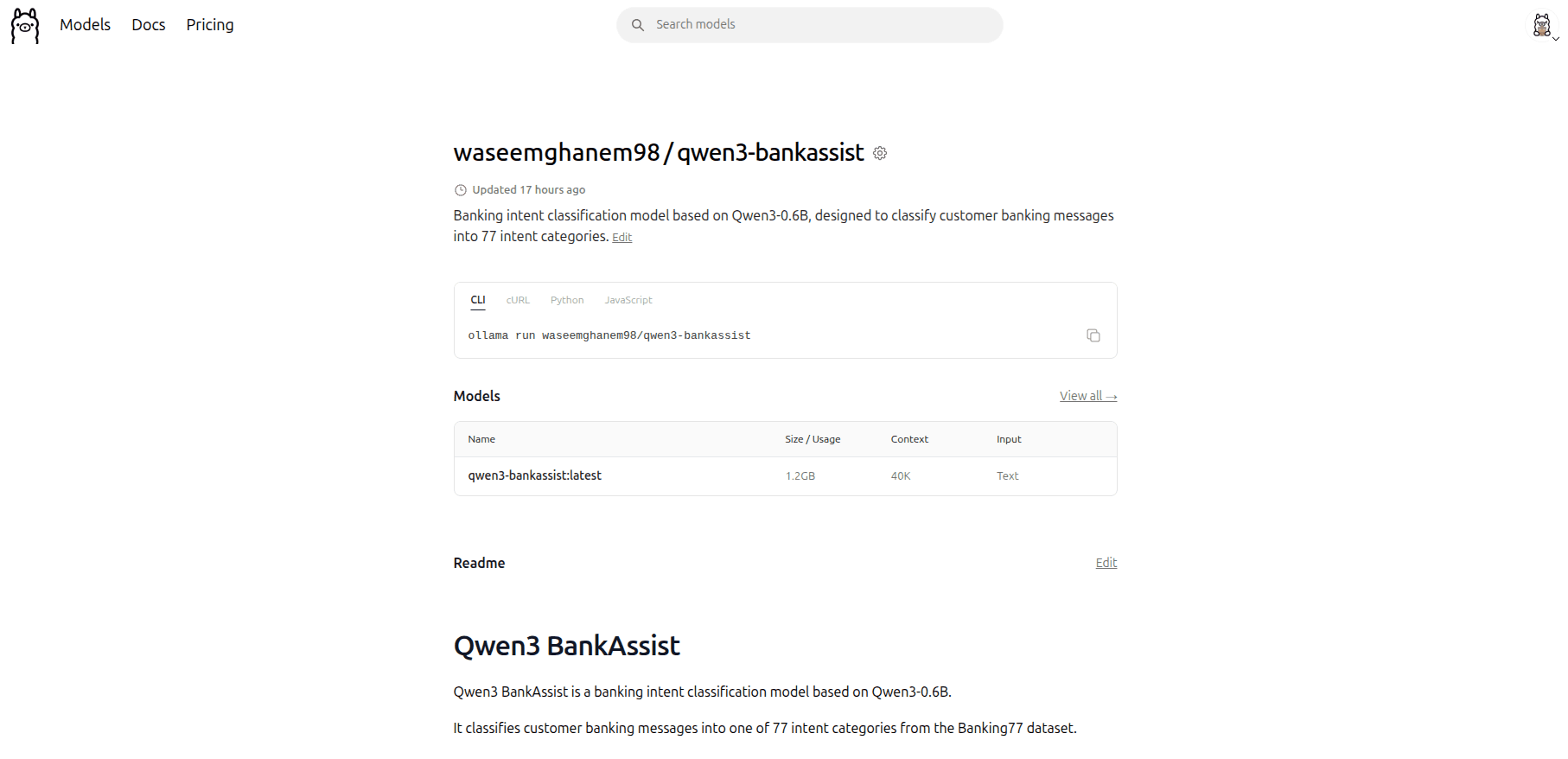
To work more directly with model behavior, I fine-tuned BankAssist.

BankAssist

2026

BankAssist is a hands-on machine-learning project in which I fine-tuned Qwen3-0.6B for intent classification on Banking77. I used Hugging Face, PyTorch, TRL, PEFT, and LoRA to build the training and evaluation workflow.

I worked through the full lifecycle, from dataset preparation and parameter-efficient training to evaluation, adapter publishing, merged-model publishing, and standalone inference checks. It was an exercise in learning the complete fine-tuning workflow, not an attempt to present the model as production-ready.

Base model22.07%
Fine-tuned47.79%

Accuracy in this project’s evaluation setup

BankAssist training and evaluation results

At the Columbia x NYU Claude Builder Club Hackathon, my team built Permitly.

Permitly

2026

Permitly helps first-time New York City restaurant owners understand which permits and licenses they need, and in what order. A structured onboarding flow captures details such as borough, cuisine, seating, alcohol plans, and target opening date.

From that information, the product assembles permit sequencing, timeline guidance, cost guidance, and AI-assisted recommendations. We kept the hackathon build focused on making an unfamiliar process easier to navigate.

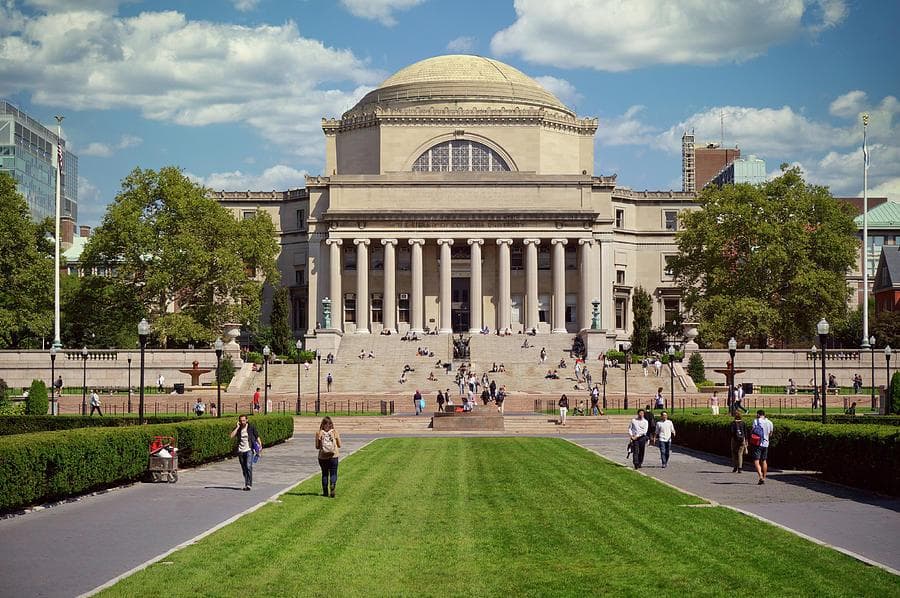
Columbia University

Bachelor’s in Computer Science

Expected Summer 2027

Columbia University campus and Low Memorial Library
Photo: Daniel Portalatin

Want to talk?

If you’re working on an interesting software or AI problem, I’d be glad to hear about it.